Your first week in the cardiovascular ICU can feel like drinking from a fire hose. The patients are complex. The alarms never stop. Everyone seems to speak in numbers.
I spent 19 years at the bedside in the CVICU. I remember that first week well. Here’s the good news: you don’t have to learn it all at once. You just need a plan for each day.
Your Day-by-Day Game Plan
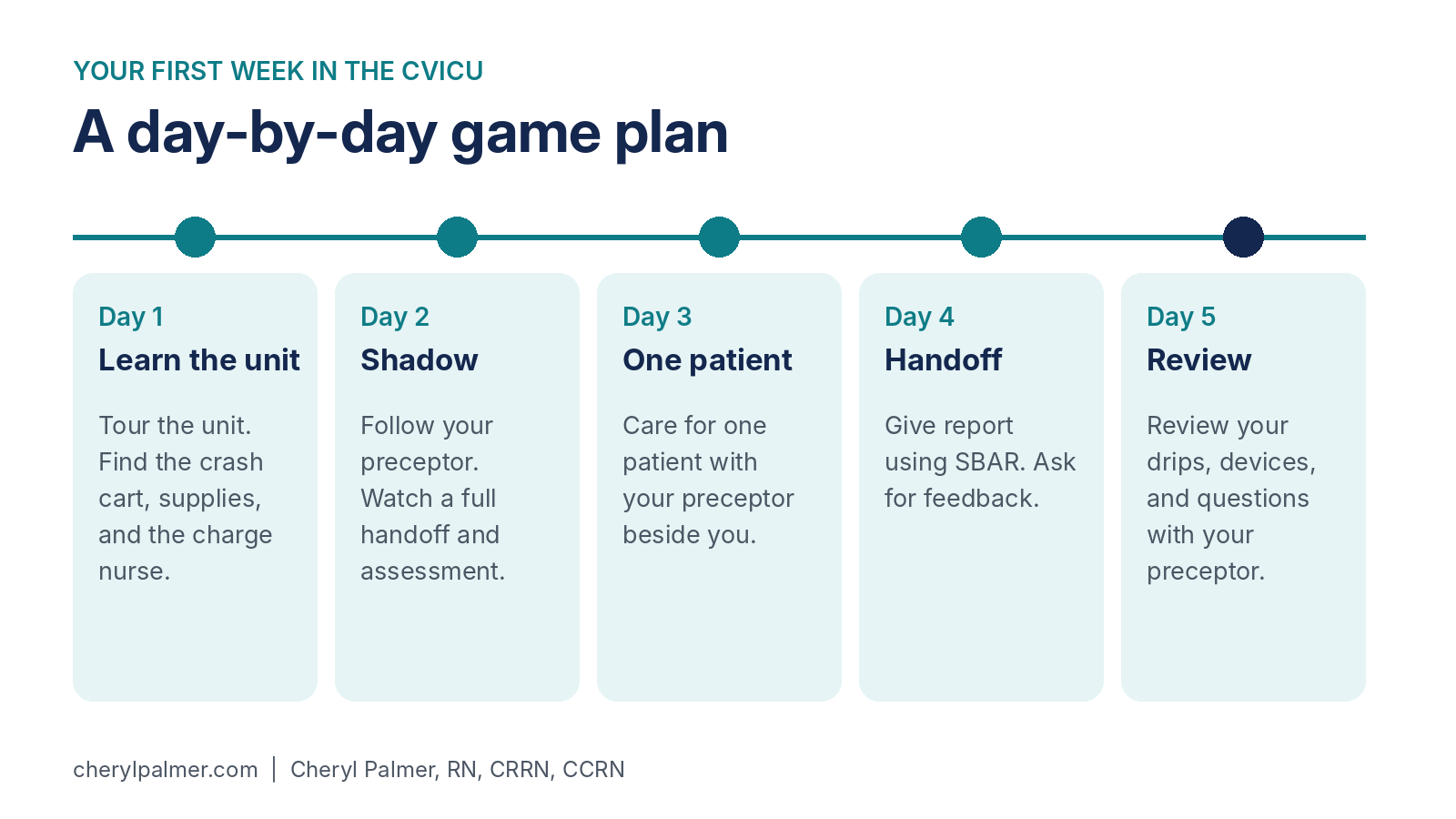
Day 1: Learn the Unit
Start with the space. Find the crash cart, the defibrillator, and the code supplies. Learn where the pacing box, transducer kits, and blood gas supplies live. Find the charge nurse and learn how to reach the rapid response team.
Ask for a copy of the unit’s report sheet. Most CVICU nurses use one. It keeps you from missing key details.
Day 2: Shadow Your Preceptor
Watch a full shift from start to finish. Pay close attention to two things:
- How your preceptor gives and takes handoff
- How your preceptor does a head-to-toe assessment
Write down every question. No question is too small.
Day 3: Care for One Patient
Take one patient while your preceptor stays close. Focus on the basics: a complete assessment, safe medication checks, and clear notes. Speed comes later. Safety comes first.
Day 4: Give Your First Handoff
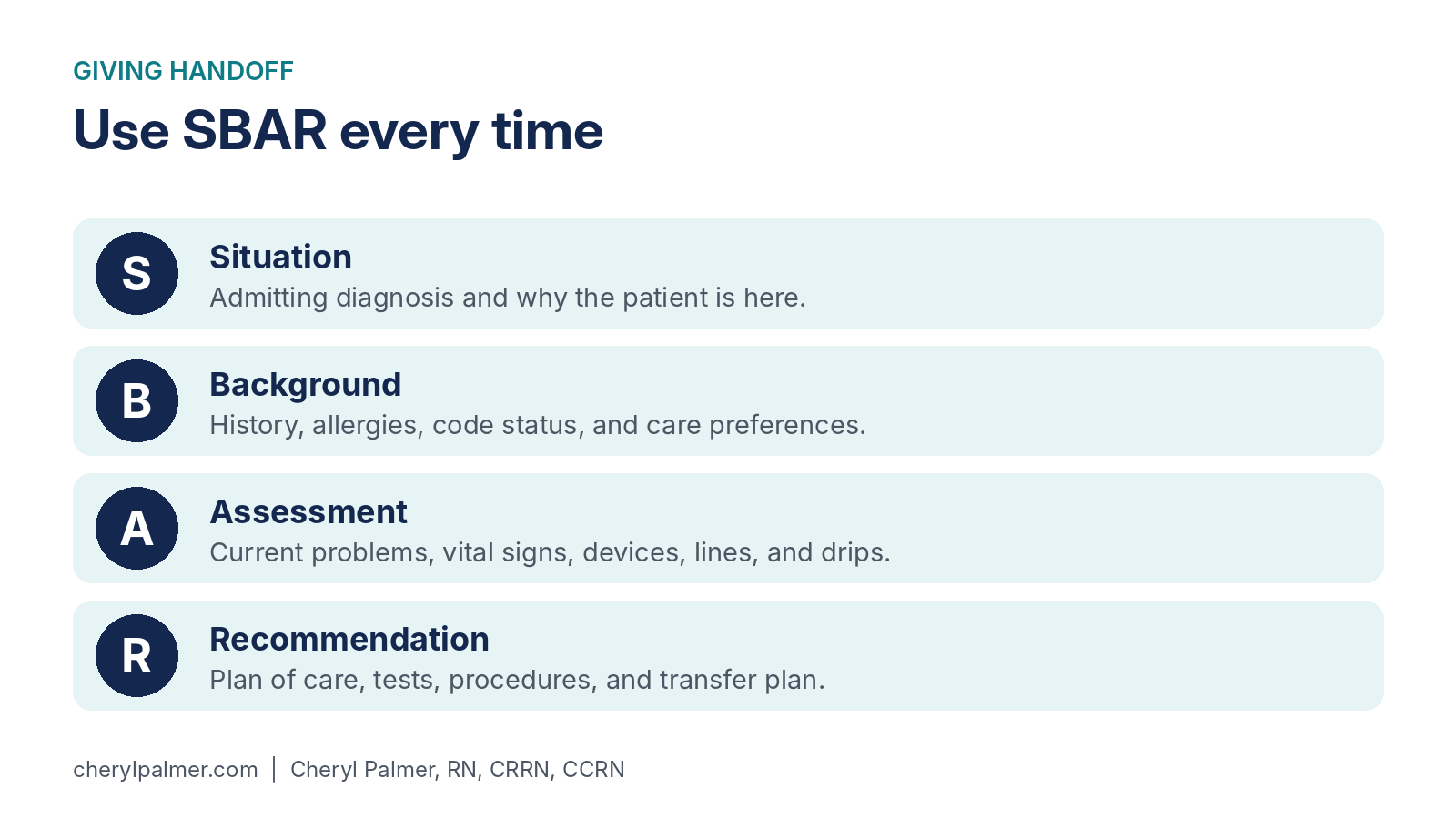
Give report to the next nurse using SBAR. Then ask your preceptor for feedback. A clear handoff protects your patient and builds trust with your team.
Day 5: Review Drips and Devices
End the week by reviewing the drips and devices you saw. Which pressors were running? What did the pacing box settings mean? How was the arterial line leveled? Go over each one with your preceptor.
What Surprises New CVICU Nurses Most
The pace. Patients can change fast. A small drop in blood pressure can matter a lot after heart surgery. You learn to look at trends, not single numbers.
The math. Drips run in mcg/kg/min. Hemodynamic values come with formulas. Keep a reference card in your pocket until the numbers feel natural.
The teamwork. Surgeons, intensivists, perfusionists, respiratory therapists, and pharmacists all work closely with you. Speak up early when something looks wrong.
Habits That Help You Feel Steady Fast
- Prepare before your shift. Look up any device or drip you don’t know.
- Use a report sheet. Fill it in the same order every time.
- Trend your numbers. Compare each value to the last one, not just to normal.
- Ask for help early. Strong CVICU nurses ask questions all the time.
- Take your breaks. You can’t care for others if you run on empty.
You Belong Here
Every expert CVICU nurse once had a first week. Give yourself grace. Learn one thing well each day. In a few months, you’ll be the one helping the new nurse find the pacing box.
Want More Help?
My free CVICU Quick Reference Cards cover normal hemodynamic values, shock patterns, ECG lead placement, pacemaker codes, and common drips. Sign up on the Nurse Education page to get them.
For the full picture, my e-book How to Survive the CVICU: The New Nurse’s Guide walks you through assessment, hemodynamics, pacing, drips, ventilators, and mechanical support in 15 easy chapters.