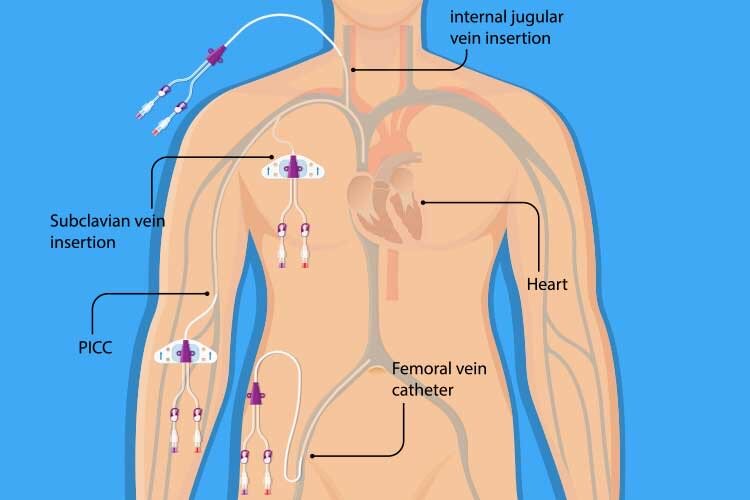
One of the procedures that you will be performing quite regularly in the CVICU is removal of a central venous catheter. This is what you need to know about the procedure
Equipment
Suture Removal Kit
Sterile 4 X 4’s
Face mask/splash guard, sterile/non-sterile gloves
Tape or Transparent Dressings
In order to culture tip:
CHG or alcohol swabs
Sterile gloves
Sterile container
Procedure
Verify review of labs (INR, plts, etc.) If platelets are low and or INR is elevated, discuss with the provider before removing CVC
Mask, hand hygiene, gloves
Remove old dressing and cut sutures, discard old gloves and change to sterile gloves
Remove CVC
Positioning during central line removal is a critical intervention to prevent air embolism
Inform the patient
Place the patient supine (they should not be sitting or upright) should be placed in the head down (Trendelenburg) position for removal
Or supine (femoral or cannot tolerate Trendelenburg)
Instruct the patient to hold their breath and perform the Valsalva maneuver (forced expiration with the mouth closed) when the catheter is being removed
If the patient is unable to cooperate with instructions, the catheter should be removed following inspiration
Gently withdraw catheter while applying firm direct pressure using sterile gauze (occlusive dressing) to insertion site. Cover the insertion site immediately with a sterile gauze
Tell the patient to breathe normally after the CVC is removed.
Maintain firm manual pressure until haemostasis is achieved. The insertion site must then be covered with an air-occlusive dressing, (like Vaseline gauze) which should remain in place for 24-72 hours
Observe site for bleeding and hematoma formation
Patient remains supine for 30 minutes post CVC removal or as appropriate to the clinical situation
Symptoms associated with venous air embolism include:
Shortness of breath
Hypotension
Loss of consciousness
Cardiac arrest
Treatment of Venous Air Embolism
Placement of the patient in the head-down, left-side-down position,
Administration of 100% O2, and
Cardiopulmonary resuscitation