Lidocaine is metabolized by the liver
The therapeutic range is 1.5 to 5.0 mcg/mL
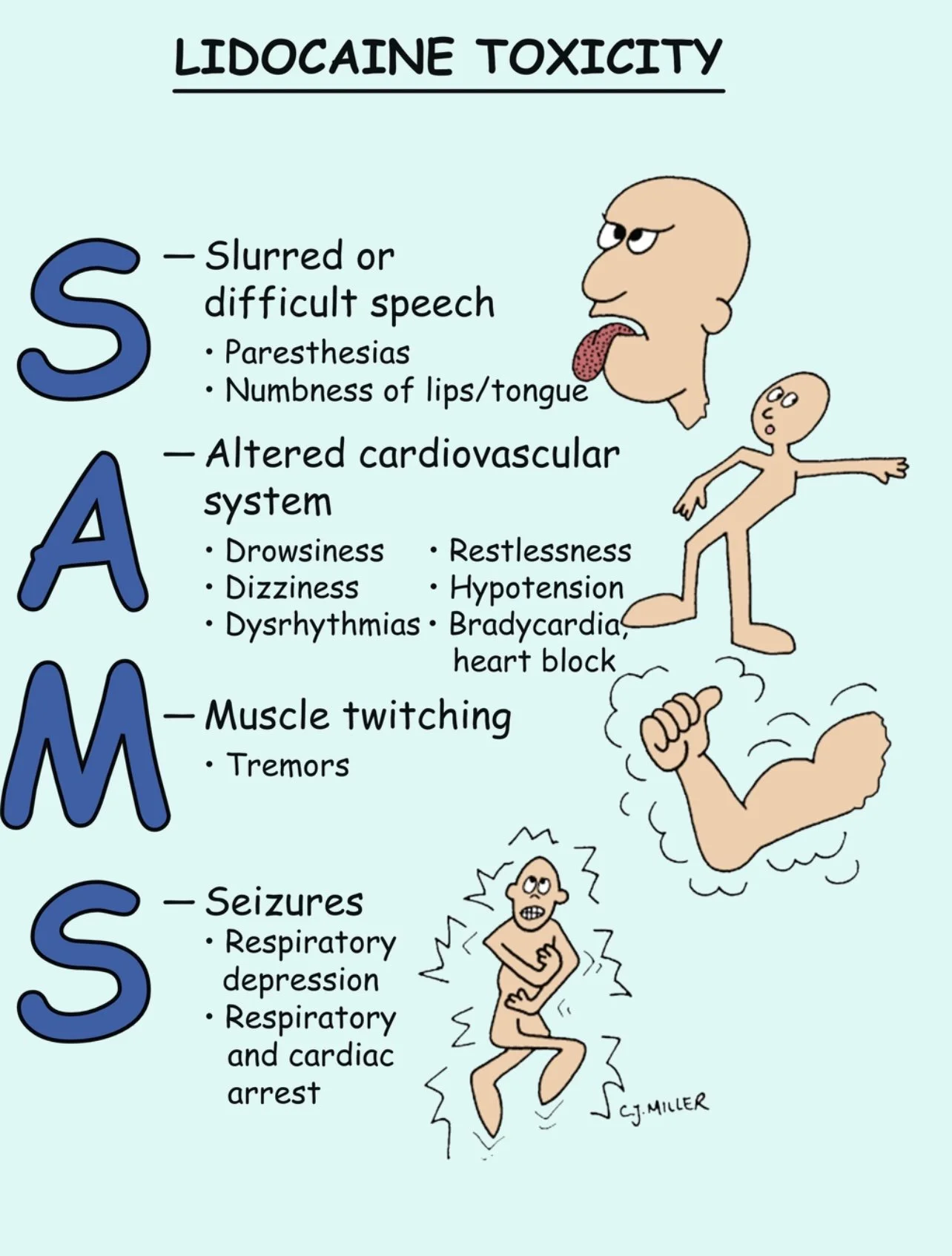
In higher doses and at toxic levels, the central nervous and respiratory systems will be affected.
Effects on Heart and Electrocardiogram (ECG)
Blocks sodium channels and slows conduction in atria and ventricles
Reduces automaticity in ventricles and bundle of His–Purkinje system
Accelerates repolarization
No significant impact on ECG
Signs and Symptoms of Toxicity
High and prolonged doses—drowsiness, confusion, paresthesias
Toxic doses—seizure, respiratory arrest
Treatment
Equipment for resuscitation (code cart)
Diazepam or phenytoin to be used for seizures
IV Lipid emulsion infusion
Nursing Implications
1. Assess level of consciousness and orientation.
2. Administer at the prescribed IV rate—administration that is too rapid can cause problems.
3. Protect for possible seizure activity; assess for paresthesia.
4. Check vital signs frequently.
5. Monitor ECG and report unusual activity or changes in rhythm.
6. Assess respiratory system, ventilation, and gas exchange (oxygen saturation).
7. Lidocaine preparations that contain epinephrine must never be administered IV; doing so can cause severe hypertension and life-threatening dysrhythmias. Lidocaine used for local anesthesia often contains epinephrine.
Excerpt From
Mosby's Pharmacology Memory NoteCards - E-Book | Find it here
JoAnn Zerwekh MSN, EdD, RN