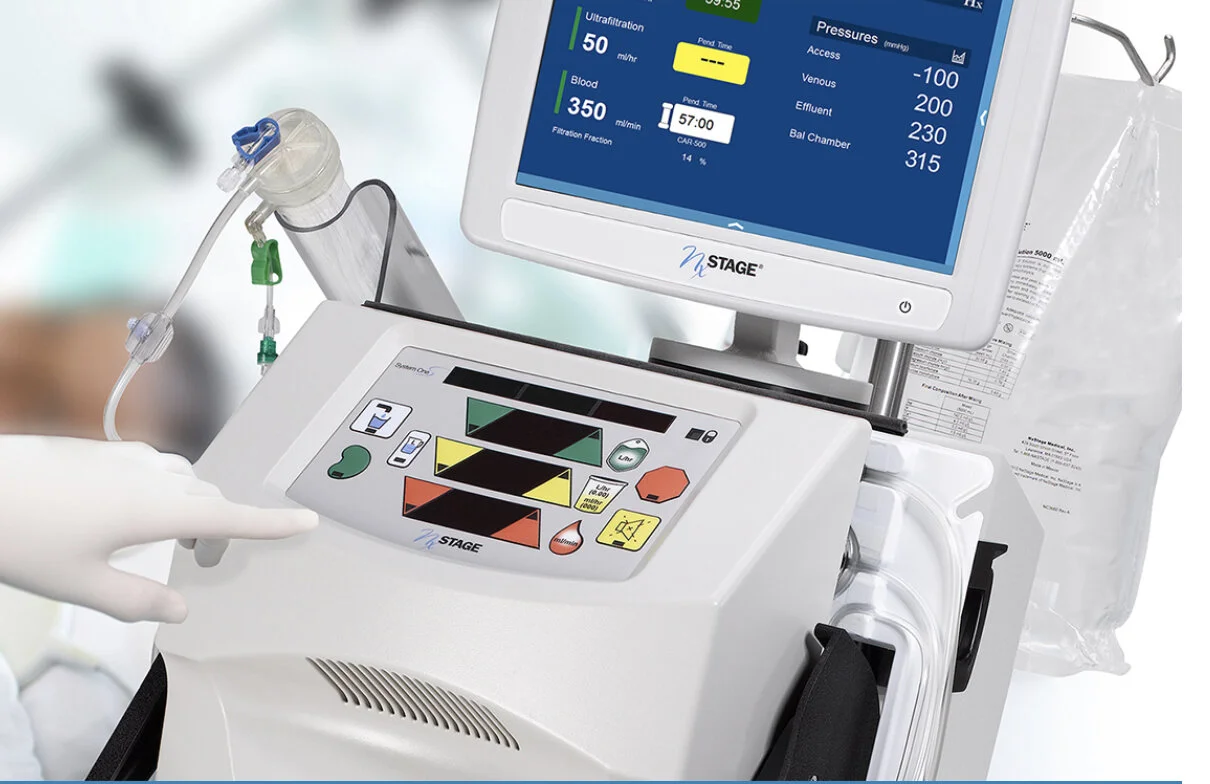
In the ICU you may have patients that require CRRT therapy.
Types of CRRT
SCUF (slow, continuous, ultrafiltration)
Rate: 100-300 mL.hr
Function: fluid removal
Nursing considerations: may require anticoagulation
CVVH (continuous venovenous hemofiltration)
Rate: 35 mL/kg/hr
Function: Fluid removal, solute removal by convection
Nursing considerations: fluid pre-dilution or replacement required
CVVHD (continuous venovenous hemodialysis)
Rate: 35 mL/kg/hr
Function: Fluid removal, solute removal by diffusion
Nursing considerations: dialysate solution is required
CVVHDF (continuous venovenous hemodiafiltration)
Rate: Ultrafiltration is limited by the amount of pre/post-dilution or dialysate fluid infused
Function: Fluid removal, solute removal by convection and diffusion
Nursing considerations: fluid pre-dilution or replacement required, dialysate required
Requirements: Venous access for SCUF, CVVH, CVVHD, and CVVHDF. A blood pump, a filter, and therapy fluid (dialysate, pre-dilution, or post-dilution)
Specific Indications: Fluid overload unresponsive to diuretics, electrolyte imbalance, drug overdose, inability to tolerate hemodialysis, acute or chronic renal failure in a hemodynamically unstable patient, can also be used in sepsis, lactic acidosis, heart failure, multi-organ dysfunction, hepatic failure, or rhabdomyolysis.
Contraindications: Lack of venovenous access, rapid treatment required, coagulopathy.
Advantages: Removes solutes gradually, Decreased risk of hemodynamic instability,
Disadvantages: The patient has to be in bed if access is in the femoral site or is unstable, complicates dosing of medications that are dialyzable.
Complications: Hypotension, hypovolemia, hypothermia, electrolyte imbalance of potassium magnesium calcium and phosphorus, acid-base imbalances, access complications to include infection, clotting and bleeding, hemorrhage related to anticoagulation disruption of filter or tubing, and air embolism.